
Insomnia and Rentgen often get compared because both deal with API requests. But that comparison only makes sense on the surface. Once you look at how they are actually used, they solve very different problems at very different moments in the API lifecycle.
Insomnia is a full API development platform. You can design endpoints, send requests, organize collections, run tests, manage environments, sync with Git, collaborate with teams, and even extend it with plugins. It is built for developers and QA who are actively working with APIs every day.
Rentgen is not trying to compete with that. It shows up earlier, at a much simpler but more dangerous moment — right after the first request works and before anyone has properly tested what happens when it does not.
Insomnia is built for structured API work
If your team builds APIs seriously, Insomnia fits naturally into that workflow. You define requests, reuse variables, manage authentication, write assertions, run collections, and integrate everything into version control. It is not just a request sender. It is where API work becomes organized and repeatable.
You can design APIs, mock them, debug responses, and build proper test suites. Teams use it to collaborate, review changes, and scale their API workflows across environments. This is where structure matters, because APIs grow and the number of requests quickly becomes unmanageable without tooling.
But there is an important detail: Insomnia works with what you define. The quality of testing depends on the cases you think about. If you do not add a test for invalid input, it does not exist. If you do not consider boundary values or malformed payloads, those paths remain untested.
Rentgen is built for what you did not think about
Rentgen assumes something very simple: the first working request is misleading. Not because the API is bad, but because it was tested under perfect conditions. Real systems do not behave like that for long.
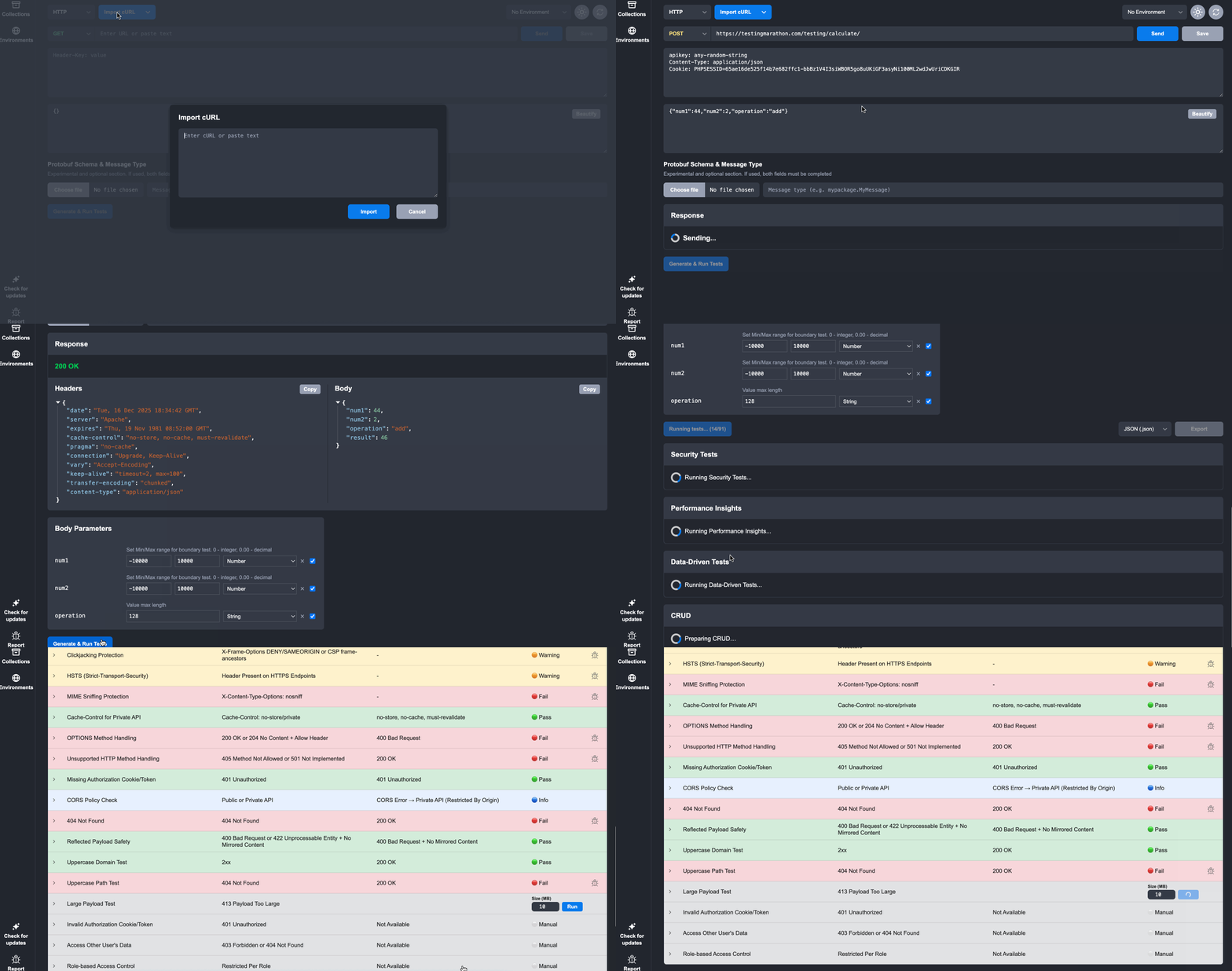
Instead of asking you to write tests, Rentgen takes one real cURL request and expands it automatically. Missing fields, wrong data types, boundary values, invalid enums, whitespace issues, malformed payloads — the kind of input that eventually reaches production whether you planned for it or not.
The goal is not to replace structured testing. The goal is to expose weak spots quickly, before you invest time building tests around assumptions that are not actually true.
The real difference is timing
Insomnia lives in the main workflow. You use it to build, test, debug, and maintain your API interactions over time. It is part of daily development. It grows with your system.
Rentgen lives before that. It is a short, aggressive check. You paste a request, generate tests, and immediately see how the API behaves outside the happy path. It is not about managing complexity. It is about exposing it early.
That difference matters because many teams move too quickly from “it works” to “let’s automate this”. They create test suites around clean scenarios without ever exploring how fragile the endpoint actually is. When problems appear later, they are harder to debug and more expensive to fix.
Automation based on assumptions vs automation based on reality
Insomnia helps you build automated checks, but those checks are only as good as the cases you include. If your initial understanding of the API is incomplete, your automation reflects that. You end up with a clean test suite that quietly ignores important edge cases.
Rentgen changes that starting point. It gives you a fast overview of how the API behaves under stress before you write any automation. Some results will confirm your expectations. Others will show inconsistencies, unexpected status codes, weak validation, or even backend crashes.
That information helps you decide what is actually worth automating. Instead of guessing, you build tests based on observed behavior.
Use both, but for the right reasons
If your team needs a powerful API platform with collaboration, environments, and long-term test management, Insomnia is a strong choice. It is designed for that job and does it well.
If your team wants a fast way to challenge an endpoint before trusting it, Rentgen fits naturally before Insomnia’s structured workflows. It does not replace your platform. It improves the quality of what you put into it.
The workflow is simple: get a working request in Insomnia, copy it as cURL, run it through Rentgen, fix the obvious issues, and only then turn that into proper tests and collections.
Insomnia helps you build and manage API systems. Rentgen helps you find out what those systems are not handling yet. Same request. Different phase. Different job.