
Tusk Drift and Rentgen are both trying to reduce the pain of API testing, but they approach the problem from opposite directions. Tusk Drift records real API traffic and replays it as regression tests. Rentgen takes one working request and mutates it into messy edge cases before formal testing begins.
That makes the comparison interesting, but not competitive. Tusk Drift is about making sure real behavior does not drift over time. Rentgen is about finding out whether a new or changed endpoint can survive bad input in the first place.
One protects known behavior. The other exposes unknown behavior. Both are useful, but they answer different questions.
Tusk Drift starts from traffic that already happened
Tusk Drift’s idea is strong because real traffic is valuable. Instead of asking developers to manually invent every test case, it records actual API calls from a service and replays them later as tests. The goal is to catch regressions when code changes accidentally break behavior that used to work.
This is especially useful in systems where written test suites do not fully reflect production reality. Real users and real integrations often exercise paths nobody remembered to automate. Recording and replaying that traffic can turn observed behavior into a practical regression safety net.
That kind of testing belongs naturally in CI, pull requests, safe refactoring, and regression workflows. The question Tusk Drift asks is simple: did today’s change break behavior that existed yesterday?
Rentgen starts before there is traffic to replay
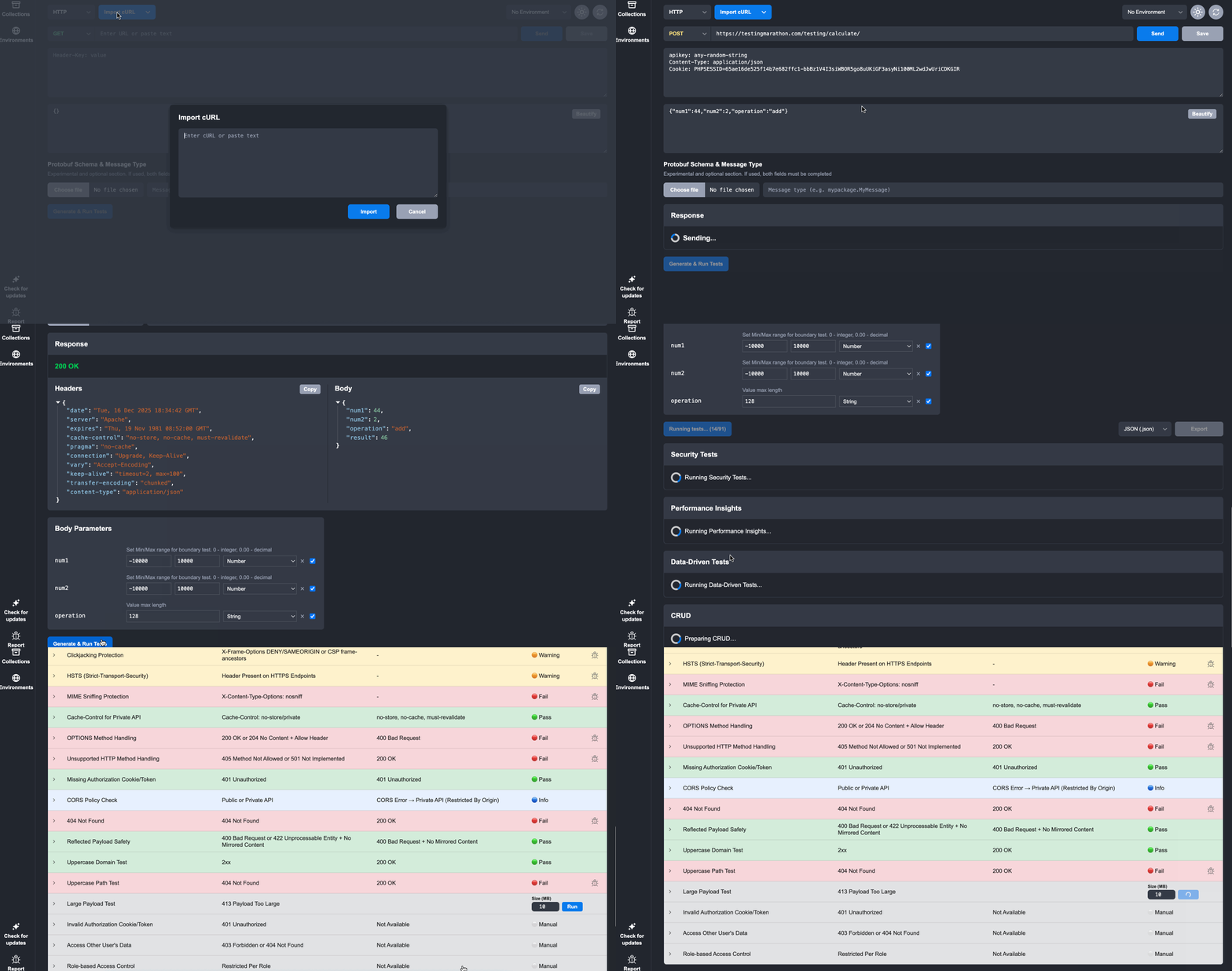
Rentgen works earlier. It does not need production traffic, historical traces, a recorded baseline, or a mature system. It needs one real request. Usually that request comes from cURL, Swagger, Postman, logs, or an API client.
From that single request, Rentgen generates variations automatically. Missing fields, wrong data types, boundary values, whitespace issues, invalid enums, malformed payloads, unsupported methods, and other boring but important cases are tested immediately.
The question Rentgen asks is different: before this endpoint becomes part of a bigger system, how does it behave when input stops being clean?
Regression and resilience are not the same thing
Tusk Drift is mostly about consistency. If the system behaved one way before, replay testing helps detect when a new change causes it to behave differently. That is valuable because regressions are expensive, annoying, and often discovered too late.
Rentgen is mostly about resilience. It does not compare today to yesterday. It checks how the API behaves under imperfect input right now. Does validation work? Are errors predictable? Does the backend return clean 4xx responses, or does it panic with 500? Does the endpoint accept things it should reject?
These are different quality signals. A system can be regression-safe and still fragile under untested bad input. A system can pass Rentgen’s hygiene checks and still need regression protection later. One does not cancel the other.
The timing is different
Tusk Drift becomes powerful when a service already has meaningful traffic to record. It needs behavior to observe, traces to replay, and enough real usage to generate useful regression coverage. That makes it a strong fit for existing services, active products, and teams that want production-like regression tests without writing every case by hand.
Rentgen is useful even when the endpoint was created five minutes ago. There may be no users, no traffic, no traces, no regression history, and no formal test suite yet. But there is already one working request. That is enough to start asking uncomfortable questions.
This is why Rentgen fits naturally before QA handoff, before automated regression suites, and before CI gates. It gives a fast local reality check while the code is still cheap to change.
A workflow that uses both
A practical workflow can use both tools without forcing a fake choice. During early development, use Rentgen to stress-test a new endpoint from a single cURL request. Fix obvious validation gaps, unexpected 500 errors, inconsistent status codes, and weak input handling before the endpoint becomes part of a larger system.
Once the service is live and real users or integrations are exercising it, Tusk Drift can record that traffic and replay it as regression tests. Now the team can detect when future changes break real behavior that customers or internal systems already depend on.
Rentgen helps before behavior is trusted. Tusk Drift helps after behavior exists and must not silently drift.
No replacement story here
Tusk Drift is not trying to be a cURL-based API hygiene scanner. Rentgen is not trying to be a traffic recording and replay system. They are different tools for different phases of API quality.
Use Rentgen when you have one request and want to know how the endpoint handles messy input. Use Tusk Drift when you have real traffic and want to make sure future code changes do not break behavior people already use.
Tusk Drift turns real traffic into regression protection. Rentgen turns one request into early behavioral discovery. Same API lifecycle, different timing, different job.